News
The Billings Family: Part 2
Skin in the game
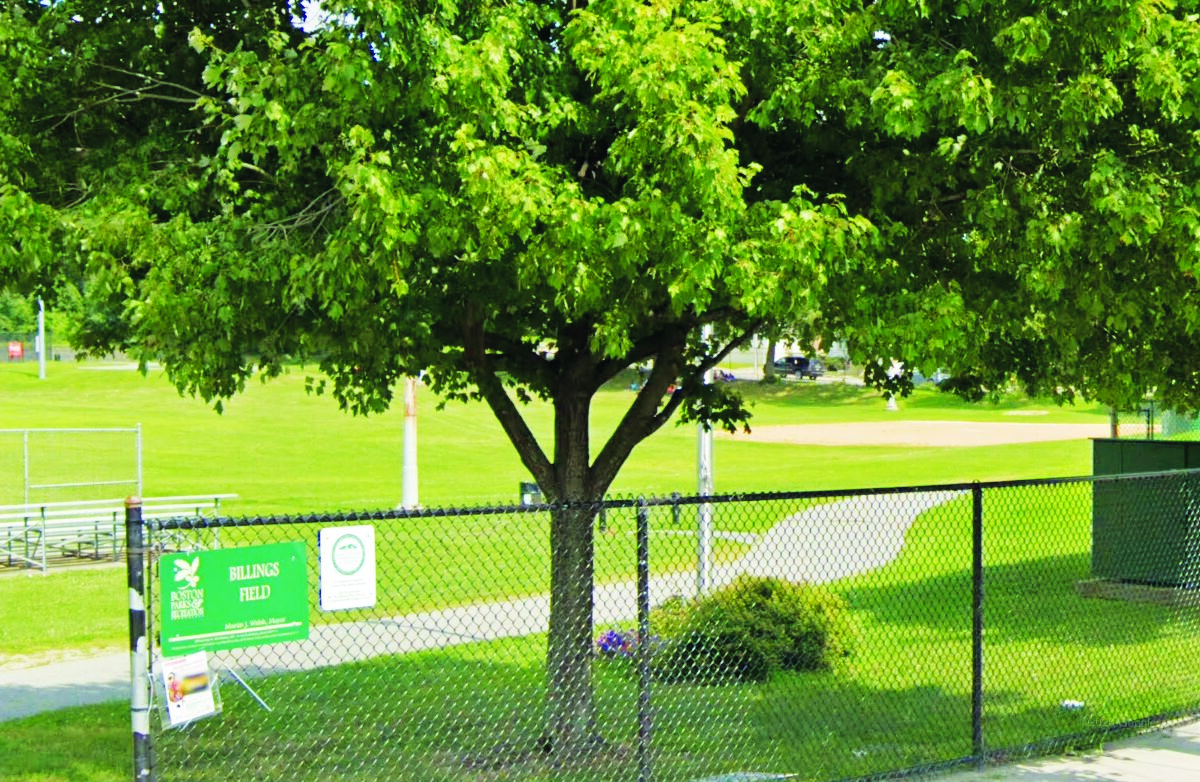
In honor of West Roxbury’s 175th Anniversary, The Bulletin has been highlighting stories about the community’s early history. We previously discussed the family behind the Billings Field namesake, including their businesses, landholdings, and civic involvement. The story examined the lives of Lemuel, Benjamin, and Joseph Billings, and how they helped shape 19th-century West Roxbury. This piece explores their stories in greater detail.
In the 1800s, West Roxbury transformed from a rural farming community into a suburban Boston neighborhood. West Roxbury (as well as modern-day Jamaica Plain and Roslindale) separated from the Town of Roxbury in 1851 to preserve its rural character. In 1874, it was annexed by the City of Boston, largely due to water supply concerns.
A notable aspect of 1800s West Roxbury was the sheepskin factories owned by the Billings family. “For most of the 19th century there prospered in West Roxbury a leather-dressing, sheepskin, and wool-combing industry that was an important dependence of the community,” states a 1951 article by George Wolkins in the Bulletin of the Society for the Preservation of New England Antiquities. Wolkins was the president of the West Roxbury Historical Society from 1939-41.
“It [West Roxbury] was ‘in the country’; its honored soldiers in the Civil War were called ‘Heroes of a Country Town’; and over narrow dirt roads that are now broad concrete avenues were drawn supplies to keep in operation the two plants known as Billings factories.”
To explore the legacy in greater detail, we begin in colonial-era Milton. The Blue Hill Tavern, owned by Ebenezer Billings (1719-66) was known for its “elegant boarding-house and fruit gardens.” But two of his sons left the family tavern business and ventured into a different trade.
Benjamin Billings (1765-1829) began a career in leather-dressing and making breeches along the Old County Road, present-day Centre Street. He married Susanna Weld of the prominent Weld family of West Roxbury in 1790. “David Weld [Susanna’s father] was the owner of hundreds of acres, perhaps two-thirds woodland, from which could come the astringent bark Benjamin needed for soaking his calfskins, sheepskins, and goatskins,” Wolkins explained in the “Bulletin of the Society for the Preservation of New England Antiquities.” A staunch Federalist, Benjamin Billings was well-respected in the community and served as treasurer of the local school district.
Benjamin’s brother, Lemuel (1757-1842), settled in modern-day West Roxbury after the Revolutionary War. Lemuel was a hatter who was known as a “gentleman” around town. The brothers owned land on opposite sides of the road. In the late 18th and early 19th centuries, the Billings brothers utilized hand tools such as spinning wheels and hand looms. As machinery advanced in the late 1700s, Benjamin’s operation expanded and included the wool trade. He purchased land that extended from the “meadows by the Charles River” up to Bellevue Hill.
One challenge Billings faced when running his business was poor road conditions. County Road wound around hills and wetlands, and was often filled with mud or dust. In the winter, the road would freeze for months. Benjamin relied on these local routes to use oxen to transport heavy supplies such as granite, brick, whale oil, bales of wool, and iron kettles. By the early 1800s, towns began investing more money into their roads. Next time you’re sitting in traffic on Centre St., remember — you could be on a horse and buggy with your wheels stuck in mud. (On the bright side, the price of gas would not be an issue.)
When Benjamin died in 1829, his son Joseph Henry (1809-74) stepped up to expand the family business even further. Joseph invested in carding machines, which were “industrial textile tools powered by water or steam that mechanized the laborious process of cleaning, detangling, and aligning raw wool or cotton fibers.” They could process wool 60 times faster than hand carding. “In a few years he [Joseph] had a wool-combing enterprise that compared with others in the vicinity of Boston,” Wolkins noted.
Circa 1839, Joseph began building a plant located diagonally across from his residence on Centre Street, adjacent to Westerly Burying Ground. The factory consisted of two large four-and-a-half-story wooden buildings. They housed wool-treating machines that were considered modern at the time.
He also expanded J.H. Billings & Co. to the Dedham/West Roxbury line on Bridge St. The factory, built in 1841, was situated next to the Charles River, where the water was used for washing wool. The building was lost to a fire 43 years later.

By 1850, Joseph Billings had grown his wool-combing and wool-pulling business into an extensive operation. J.H. Billings & Co. was part of a broader wave of small-scale industrialization that transformed communities from farming towns into local manufacturing sites. Around this time, large parcels of farmland in West Roxbury were sold and developed for housing.
“The railroad was completed by 1850; a considerable number of immigrants had settled along Baker Street and south of Cass Street, having gone to West Roxbury beginning in 1845 to meet the demand for labor on the West Roxbury Branch Railroad,” wrote Wolkins.
Over the next 30 years, J.H. Billings & Co. faced competition from much larger plants, such as factories in Lawrence and Lowell. Joseph died in 1874, and his homestead was put up for auction five years later. The building on Centre St. was turned into a dyehouse. On a snowy day in 1891, a kerosene stove exploded and the former sheepskin factory was reduced to ashes. “Two feet of snow were on the ground, and fire apparatus had difficulty reaching the blaze. The large buildings, together reaching toward the railroad from Centre Street, burst into flame,” Wolkins noted in the “Bulletin of the Society for the Preservation of New England Antiquities.” He continued, “The accumulated oil and grease, the quantities of inflammable compounds, gave no hope for saving any of it. The sixty operatives managed to get out, some on only a narrow margin; and there remained only a tangle of brick and iron. It was a solemn and impressive end to a village enterprise to which we like to believe several men had given their best.”
Little documentation of the Billings family exists from the 20th century. In the early 1900s, the farmland they once owned was designated as Billings Field, preserving their name and legacy for decades to come.
Billings Field has been a beloved public park and playground in West Roxbury for over a century. In the 1930s, a West Roxbury resident praised Billings Field in a letter to the editor of the Boston Post: “Sir: Billings Field is considered the best playground under the jurisdiction of the Boston Park Department. It has four tennis courts, a wonderful ball diamond, three junior diamonds, and a separate children's playground where teachers are in attendance. It has a large soccer field that is used every Sunday by the Boston Soccer league. It has a new $25,000 locker building with showers and up-to-date improvements. It is a well-kept playground and is conducted on a system second to no other playground in the park department.”
Over the years, Billings Field has been the site of a wide variety of community activities — Fourth of July fireworks, children’s field days, a doll carriage parade, marbles tournaments, ice skating, speed skating, live plays, concerts, football games, the Corrib Pub 5K, and countless local baseball games.
Billings Field is currently undergoing major renovations and is expected to reopen in the late fall 2026.
More in this section
Union says Allston Post Office loss = intentional privatization
Advocates say USPS actively trying to shut down post offices
October 1, 2026
JPHC: Change it after approval
JP Housing Committee wants changes to 3841 Washington Street already approved by the BPDA
October 1, 2026
Comments
For Part 1 of the Billings Family story, visit https://www.bulletinnewspapers.com/article/billings-family-parkway-area-secret-history-exposed