News
WVNA talks zoning, Poplar Food Forest
Residents raise concerns
The West Village Neighborhood Association (WVNA) met last week for its monthly meeting in a virtual format.
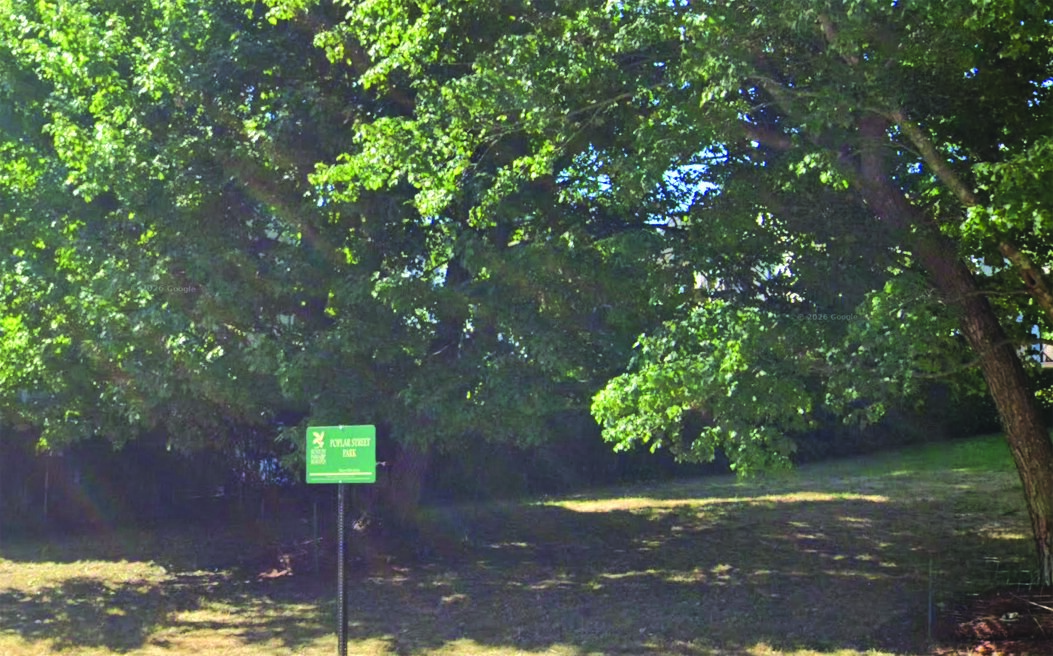
WVNA Chair Frances Donovan gave a brief overview of the history of the Poplar Park, and said it used to be a location for a church to meet in a tent before the church moved on. Since then, it was a prime location for drivers to perform donuts.
“The only reason it looks the way it does right now is due to the stewardship of the next-door neighbor,” she said. “He planted the two trees in the front, he put the granite blocks in – because people just used to drive and do donuts in it from Delano Court through Poplar Street. He seeded it and so when we realized that more and more green space was being eroded in our neighborhood, we wanted to take advantage of the park that we have.”
Donovan said over the last 11 years, there has been a concerted effort to keep the park and beautify it, and more recently they partnered with the Boston Food Forest Coalition (BFF). WVNA Poplar Street Park Committee Chair Michael VanZandt Collins said from there, they’ve been going slowly and organizing cleanups to help make the park more usable.
Collins said since he last met with the group in the spring, they, along with the Roslindale Green and Clean group and the Sarah Roberts School, have been working to clean up the park to make it usable for residents and children.
“The objective was to make the park more secure for preschool-to-kindergarten kids from the Sarah Roberts School,” he said. “It was mission accomplished, and we had a really great turnout, good vibes and the kids were able to get there within a couple of weeks before the end of the school year to have their forest days. So it was a good service to the community and big help for the Sarah Roberts Folks.”
Collins said they also had plant donations, and will have another major cleanup in the fall.
Collins said the BFF met last month at the Roslindale Branch of the Boston Public Library to discuss strategy around seeding and planting for the park to make it into a Food Forest. The idea behind such planting is to create a biological system that promotes food growth by using plants that attract pest-eating insects and deter pests, as well promote and boost the natural life cycle of each plant so that they work cooperatively – https://gvimes.link/fdfrstdef
“We’re waiting for the BFF to sort of, digest what we gave them, and then come for more discussion, thought and community input,” he said.
Collins said he and other members of the committee met with representatives from the Boston Parks Department and that there will be requests for proposals for the park in the next few months.
“So we’re hopeful we’ll be seeing that soon and that our partnership with the BFF will be even more compelling,” he said.
Collins said in addition to the big cleanups, the committee has been toying with the idea of creating informal work parties to meet every Monday night to touch up the park.
For more information on the Poplar Park, go to https://gvimes.link/wvnapplrprk
Also at the meeting Boston Planning Department Senior Planner Will Cohen came by and gave his Neighborhood Housing rezoning presentation as part of the outreach to neighborhood associations.
The full plan can be viewed at https://gvimes.link/nhbrhdzng, which includes everything Cohen went through during this presentation and several others covered at length by The Bulletin (BulletinNewspapers.com).

The basic gist that Cohen has been pitching is that the aim is to create zoning that better matches what exists in Roslindale, Hyde Park and West Roxbury (and soon Allston and Brighton) so that whenever a resident wants to put a deck in or add a dormer, they don’t necessarily have to go to the Boston Zoning Board of Appeals (ZBA) to get it.
The Zoning Code as it exists now dates back to the 60s (for the most part, Roslindale’s zoning Article 67 goes back to 2008), and most homes in the zone do not comply with current zoning. That, technically, makes them a pre-existing non-conformity (Cohen has previously stated that these “non-conformities are a majority in the neighborhood, ironically). That means most changes to the property require a ZBA meeting, which can take almost a year to schedule in some instances, and the meetings can last for up to six hours.
So, to cut down on that, Cohen said the plan was to make zoning conform to the neighborhood, since it wasn’t going the other way around. But the main point of contention in the WVNA meeting was that much of the new zoning would allow for an increase in unit counts – accessory dwelling units (ADUs) would be as-of-right in most cases (dependent on building footprint, setbacks and fire safety) and most areas would see an increase in allowable units, up to six in the densest zoning table – https://gvimes.link/usetbles
Several residents were concerned about the density increase.
“A couple of things, ADUs, I see it being abused,” said resident Ed Conway. “Developers are going to buy them and everything else. Who’s against building an ADU for me so I can live on my daughter’s property? No one. When I pass away, what happens to that ADU? It becomes rental property. Developers are going to buy all this stuff and then add another floor onto an existing building. I assume everything in that building has to bring everything up to the current code. That’s expensive!”
Conway said the expense of adding units is such that only developers will be able to afford it, and therefore profit off of it. Cohen has said in the past that that’s exactly why the city believes that a developer wouldn’t be interested, as the return would be slow and small. Cohen said only people who really need to add an ADU would, as they are expensive to do, and that would keep developers from doing so.
Resident Joey Michalakes said he’s heard a lot of arguments from opponents he doesn’t credit.
“Specifically... the notion that this particular kind of zoning change contributes to... or accelerates displacement of people or businesses – I think that’s just completely incorrect,” he said. “For what it’s worth, I’m an eviction defense attorney, I’ve been defending tenants displaced by speculators for over a decade, and my experience and that of the community groups and my clients is not that modest zoning changes like this are the drivers of displacement.”
Brighton resident Eva Webster said she felt the new zoning will just allow developers to steamroll and gouge residents.
“The bottom line is when people take advantage of the new zoning envelopes you are creating, they will create density, and there are consequences to that,” she said.
For more information on the WVNA, go to https://roslindalewvna.weebly.com
About the author
Jeff Sullivan Covers local news and community stories.
More in this section
Union says Allston Post Office loss = intentional privatization
Advocates say USPS actively trying to shut down post offices
October 1, 2026
JPHC: Change it after approval
JP Housing Committee wants changes to 3841 Washington Street already approved by the BPDA
October 1, 2026
Comments