News
Sophia Dana Ripley: Part One
Education, women's equality, and Brook Farm
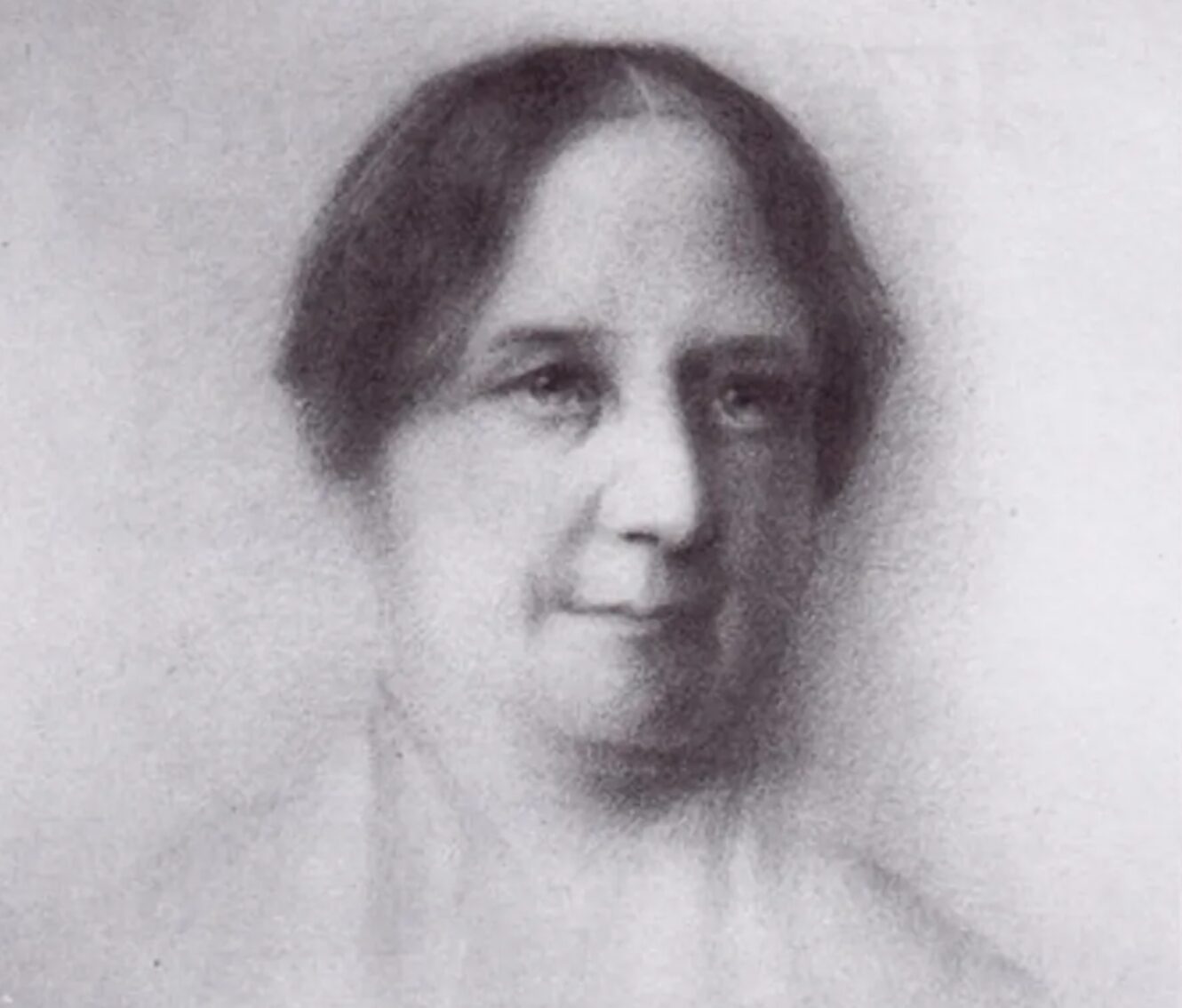
West Roxbury is well-known in history for the short-lived yet influential Brook Farm utopian experiment. Brook Farm, which was inspired by and helped to shape transcendentalism, was founded by Sophia Dana Ripley and former Unitarian minister George Ripley. Sophia was an early feminist and accomplished educator. Despite her contributions and influence, she is often overlooked.
Sophia Willard Dana was born in 1803. She was a descendant of the New England Dana family, a notable early American “dynasty” with roots in Cambridge, Massachusetts. Several Dana ancestors married into prominent West Roxbury families, including the Weld, Billings, Draper, and Whiting families.
Sophia and her sisters founded a girls’ school in Cambridge in 1823, where she was the principal teacher. She married George Ripley (1802-1880), a Harvard Divinity School graduate, in the late 1820s. They never had any children, which was considered unusual at the time. Shortly after tying the knot, he was ordained as minister of the Purchase Street Church in Boston.
Over the years, George’s sermons increasingly addressed issues such as wealth, labor, and social justice, which created conflict within his congregation. Sophia and George agreed that preaching alone would not fix social inequality. He left Purchase Street Church in 1840 due to his frustration with Unitarianism.
George joined Ralph Waldo Emerson and other intellectuals to form a discussion group. These meetings, which took place in the Ripley home in Cambridge, examined Transcendentalism. Outsiders nicknamed the group the “Transcendental Club.” The “club” was later joined by Sophia and other influential American figures, including Henry Thoreau and Margaret Fuller.
Sophia became close friends with Fuller, who was a writer, journalist, and women’s rights advocate. Sophia was one of the first attendees of Fuller’s “Conversations” seminars, which covered topics such as literature, philosophy, and women’s role in society. The sessions were offered to women in Boston since they were largely excluded from higher education. “Could a circle be assembled in earnest, desirous to answer the questions, ‘What were we born to do?’ and ‘How shall we do it?’ I should think the undertaking a noble one,” Fuller asked Sophia in 1839.
Sophia published an essay titled “Woman” in The Dial, a Transcendentalist magazine. Her essay contends that women should be valued as independent, intellectual individuals whose abilities and purpose are determined by their own character, and that they should have equal access to education.
“Woman is educated with the tacit understanding that she is only half a being, an appendage… she spends life conforming to him [the husband], instead of moulding herself to her own ideal. She loses her individuality, and never gains his respect.” Sophia’s piece also argues that women’s domestic work is far more difficult and demanding than society recognizes.

During the summer of 1840, Sophia and her husband spent time on Ellis Farm, a dairy farm located in West Roxbury. The Ripleys thought it was a charming place that was close to pine woods and the Charles River – an ideal spot for a utopian community. According to Lindsay Swift’s book, Brook Farm: Its Members, Scholars, and Visitors, the “meadows, which formed a large part of the farm, were fair to see, and fertile farms adjoining seemed to indicate a favorable soil and location.”
A few months later, the Ripleys told the Transcendental Club about Brook Farm, which would be a community based on transcendentalist ideals. They believed this utopian society would be the place to “ensure a more natural union between intellectual and manual labor; to combine thinker and the worker in the same individual; to guarantee the highest mental freedom, providing all with labor adapted to their tastes and talents, to do away with menial services by opening the benefits of education and profits of labor to all; to prepare a society of liberal, intelligent, cultivated persons, which would permit a more simple life than can be led amidst pressure of our competitive institutions.” Organized as a joint-stock company, it offered residents a share of the farm’s profits in return for contributing an equal amount of labor.
The Ripleys, along with 18 others – including American novelist Nathaniel Hawthorne – organized the Brook Farm Institute of Agriculture and Education in 1841. On Oct. 11 of that year. Sophia and George purchased the 170-acre dairy farm for $10,500. Members had already begun moving onto the land six months prior. They lived in the main building/farmhouse, which they called “The Hive.” The residents worked together to support the farm while maintaining a balance between labor and intellectual pursuits. They chose their own jobs and were paid equally, including women. Reflecting the society’s progressive values, women at Brook Farm wore pantaloons, later known as bloomers.
Sophia was in charge of the schools, including an infant school, a primary school, and a college preparatory course. She also taught history and modern languages. “Mrs. Ripley had the power to transmit her own intensity of interest to those she instructed, and inspired in them a genuine fervor for culture,” Swift states in her book. The school earned such a strong reputation that Harvard recommended it to students. It is considered Brook Farm’s only economic success.
Tune in next week for part two!
More in this section
City and state officials rally for Allston Post Office
Protesting USPS closure at 47 Harvard Ave.
October 8, 2026
Second Happy Market plans to move to 3474 Washington Street
In the new Doyles building
October 8, 2026
BPIE Mentoring program celebrating 60 years working with Boston Public Schools
Program partnered 1,200 students with mentors this year
October 8, 2026
Comments