Press Releases
ICE best practices protections discussed at SNA
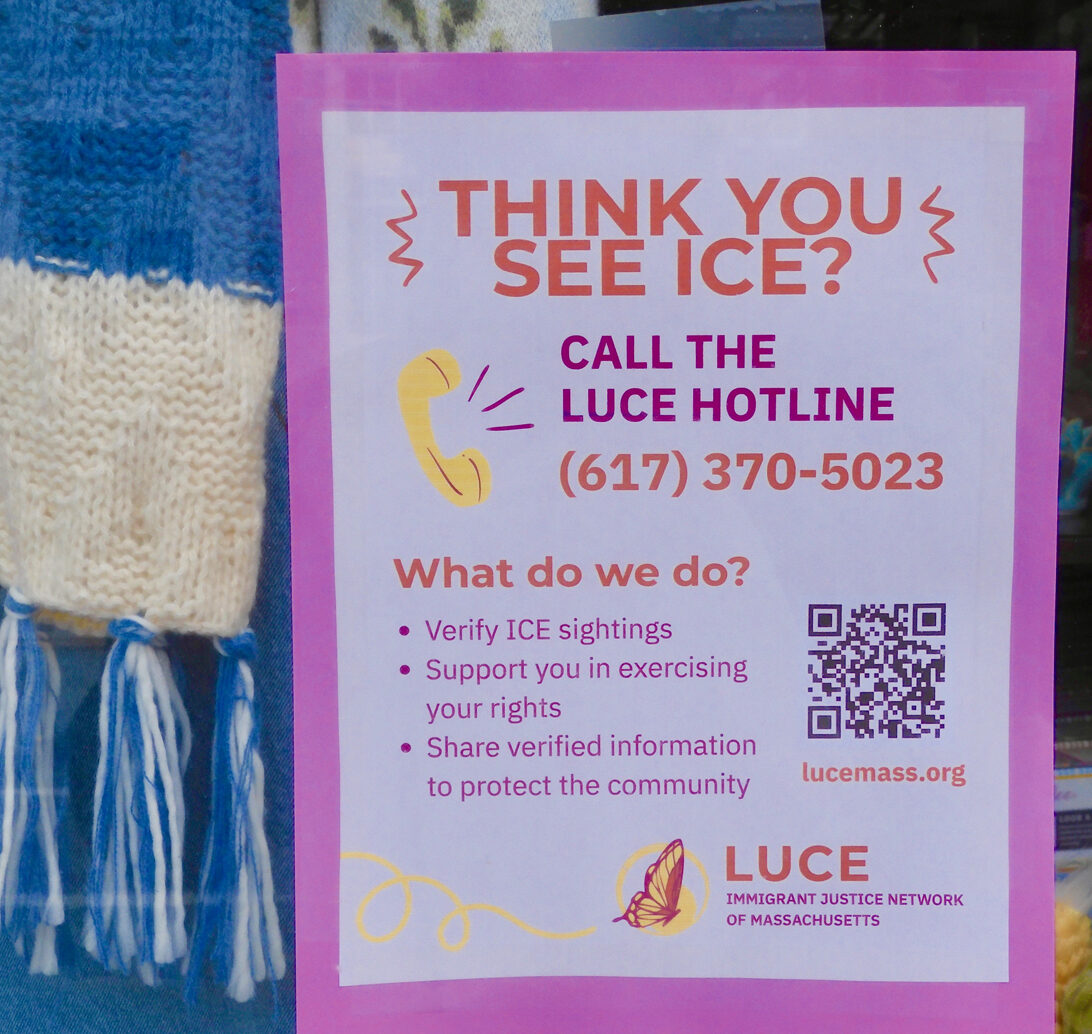
The Feb. 9 hybrid in-person/zoom meeting of the Stonybrook Neighborhood Association (SNA) was a bit tense.
On the agenda was a preparedness discussion for potential Immigration and Customs Enforcement (ICE) appearances in the Stonybrook neighborhood and a speaker was invited yet it became apparent that the speaker did not want to be identified, nor the information quoted verbatim.
The speaker who called in began by saying a small group of business owners around the Stonybrook neighborhood had been talking about their “shared perspective of increased ICE presence in our backyard.”
“We’re in a little bit of a no-man's land” referring to the Forest Hills-Egleston corridor. “There’s no Main Streets.”
The Bulletin asked who the others were in the group, “Would you be able to tell us that?” There was a pause. “No.”
“Is this off the record? Do you want your name and business in the story?” The speaker did not want to be identified. It should be noted that public meetings, if a neighborhood association chooses to have a public meeting, are open to the public. That means anyone can come, and so, anyone is there, in potentia. That is why public meetings are on the record.
What follows is a summary.
Identified as “anonymous cells” the boundaries of which were not said.
According to the speaker, it’s a block-by-block group admittedly very new at “hyper organizing.”
The goal is to share resources and to establish best practices for ICE presence in the neighborhood.
A pro bono attorney has advised the group for protection of employees and to keep the group better informed, to protect somebody at risk.
The group of other businesses is very unofficial, trying to understand the risk. There is, in JP, a degree of risk. The question is confrontation or interaction? But be very cautious.
From Egleston to Stonybrook, it’s very much a neighbor-to-neighbor “figure it out on the fly.”
Likely in the back of everyone’s mind was the sudden taking by ICE agents on Feb. 5 of a man in the middle of the Roslindale business district to the consternation of residents and District 5 City Councilor Enrique Pepen, who just happened to be nearby. Takings can take seven or eight minutes, the speaker said. There was some discussion on how cell members can be vetted to prevent infiltration.
SNA steering committee member Caliga worried about that.
“We were prepared that someone from ICE would be at this meeting,” she said. SNA member Brad Cohen said that the JP Signal group “is trying to figure out how to vet people who join.”
SNA member Peter Fraunholz urged caution.
“People that are pro ICE are appalled at their tactics,” he said. “Be careful. Don’t use a broad brush.”
Caliga had some advice.
“Whistles can warn people, but can be confrontational,” she said “Three short blasts ‘ICE is here.’ That gets people out of their homes, gets people in action.”
“Get identification,” she said. “take license plate numbers.”
With almost a sigh of relief, Silverstein moved the agenda to updates.
For the proposal at 19 Kenton Rd. Caliga read from a letter but could not say what the date was or who it came from.
She said the owners say the house is still usable but are unable to rent. The owners are weighing options, Caliga said.
Hatoffs: No information on when the gas station will close now that Boston Real Estate Capital has zoning approval [Jan 13].
White Stadium: Peter Fraunholz summarized the Feb. 6 press conference.
He noted that most of the press conference was devoted to the benefit to Boston public school athletes and athletic programs.
Fraunholz was right; the press conference opened not with the mayor but with Boston Public Schools (BPS) track coach Tony DaRosa. DaRosa went on to speak for five minutes about how the new stadium would be “a high-quality facility” with “stable funding ” for BPS students.
Da Rosa introduced mayor Wu who, after listing a long list of benefits to BPS students, assured everyone that they would be able to use the new stadium “every single day.”
Fraunholz said that after the press conference he talked with chief of streets Nick Gove and urged him to use the year that Boston Legacy Football Club would be using Gillette Stadium for home games to work out a transportation plan.
Fraunholz said that a series of community meetings devoted to the latest transportation plan will begin in April through July or August.
The result at the end, he said, would be a more finalized transportation plan.
Fraunholz suggested using the 15 Boston Legacy home days between March and October to “educate suburbanites what it will be like to use White Stadium.”
“Use the fall to inform people in the suburbs what transportation will be like,” he said, “do’s and don’t of cars coming into our neighborhood.”
The next morning Wu went on WGBH radio and doubled down on the critical reaction to the $135 million piece tag for the city’s half of the stadium.
As The Herald reported on Feb. 11, Wu said she “would have done it all over again if she knew the final cost.”
And as she said at the Feb 6 press conference Wu repeated on WGBH the $135 million price was because “we heard from over 100 public meetings what people's needs and dreams were, and we decided to expand the project to do it right… Boston kids deserve nothing but the best.”

More in this section
German Centre has no deficiencies
Earns Deficiency-Free State Survey for Second Consecutive Year
October 1, 2026
An Update on the Allston Post Office and Ways for You to Get Involved
From District 9 City Councilor Liz Breadon:
September 10, 2026
Comments