News
Sophia Dana Ripley: Part 2
Her impact reached far beyond just Brook Farm
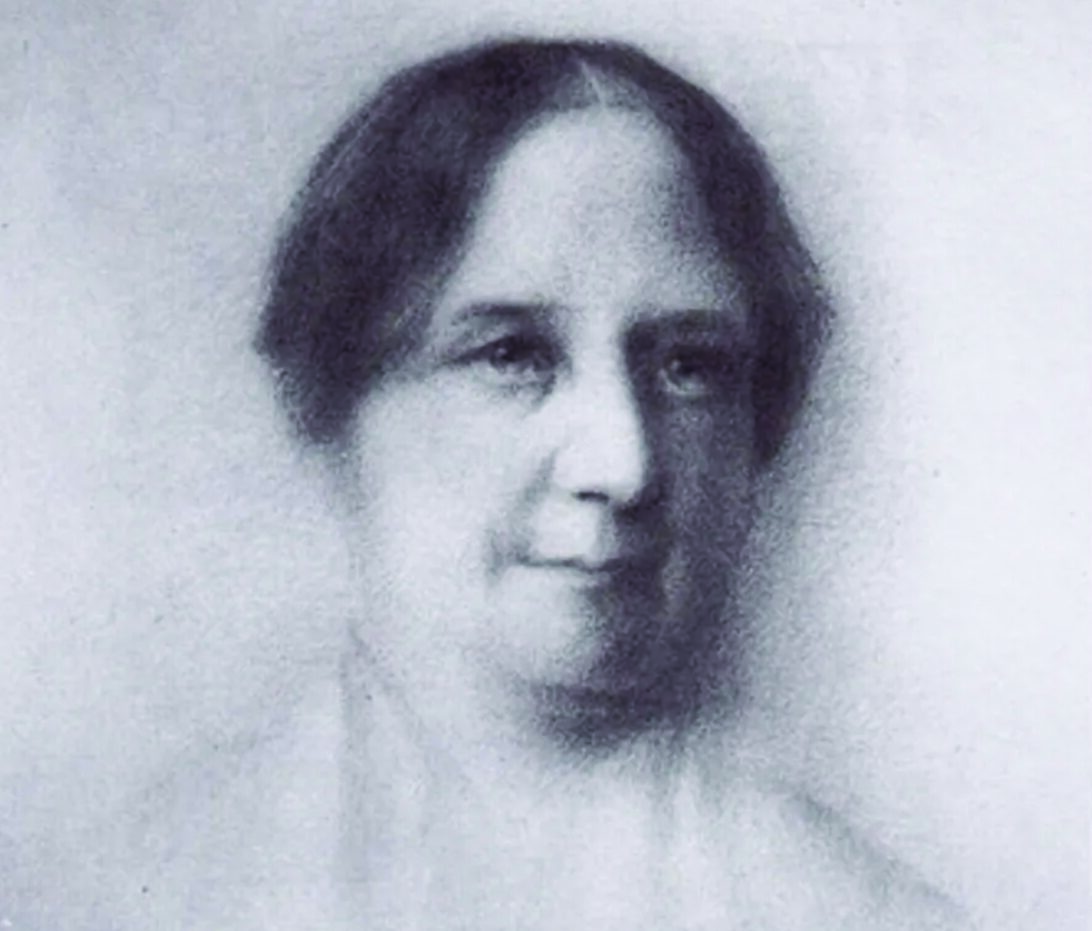
The August 27, 2026 edition of The Bulletin included a story about Sophia Dana Ripley, who co-founded Brook Farm with her husband, George. She was an accomplished educator and early feminist. Part one explored Sophia’s early life, including her founding of a girls’ school, her involvement in her husband’s Transcendental Club, the feminist writing she published, and the founding of Brook Farm.
Brook Farm (1841-1847) was a Transcendentalist-inspired utopian experiment. Despite its brief existence, it had a lasting influence on American social and intellectual thought. The community appealed to young Bostonians seeking a simpler, more idealistic way of life. Women were paid the same as men and considered autonomous from their husbands.
Sophia was in charge of the schools, and also taught history and modern languages. Brook Farm became well-known for its education; attracting many famous male and female writers. The schools also enrolled international students from as far away as Cuba and the Philippines. Notable scholars included Ralph Waldo Emerson’s nephew, Margaret Fuller’s brother, and Robert Gould Shaw. Sophia only missed two classes in six years.
Ora Gannett Sedgwick was just a teenager when she moved to Brook Farm. Decades later, she wrote an acclaimed autobiographical account of her time in the community. Titled “A Girl of Sixteen at Brook Farm,” it was published in 1900 in the Atlantic Monthly magazine. Her mother was familiar with Sophia’s reputation as a remarkable teacher and wanted her daughter to receive the best possible education. Sedgwick noted that Mrs. Ripley had elegant manners and perfect self-control, and was a positive influence on her students. In addition to overseeing the schools and teaching, Sophia spent many hours cleaning and doing laundry at the Hive — she was considered the hardest working member of Brook Farm.
Sophia was tall, graceful, and had a powerful presence. “There was something so lovely in her face,” recalled one of her nieces. “Perhaps the English would have called it countenance. Her exquisite manners, and her low, beautifully modulated voice added to the charm.”
Transcendentalism views nature as a divine space where humans find spiritual and moral guidance. Many Transcendentalists found refuge at Brook Farm. “They were of cultivated families, and were nearly all from the city and neighborhoods of Boston. Their hearts were open to the tender influence of buds and blossoms, fresh springing grass and the bubbling brook. They watched birds of various plumage; the oriole, who hung his basket nest from branches of the elm, the robin redbreast who built in the thick branches of the firs, and the sparrow,” John Codman documented in “Brook Farm: Historic and Personal Memoirs”: “There were plenty of wild flowers in the fields and in the woods nearby.”
In Sedgwick’s memoir, she reflected on the bubbling brook at the farm, describing it as a friend that expressed different emotions. Sixty years later, she could still vividly hear the running water. “I often wondered if such a place, so pure, refined, and entirely democratic, could have been started in any other place than in Boston or its vicinity,” recalled Sedgwick.
Theodore Parker, Emerson and Fuller were all frequent visitors, but they declined to join the community. About 70 to 120 people lived at Brook Farm, while it attracted over a thousand visitors each year. The community enjoyed hosting dances and plays inside the Hive, the main building.
Brook Farm was never financially stable—farming was unprofitable due to the rocky soil and the lack of labor. The construction of multiple new buildings created deep debts. In 1844, George created a new constitution for Brook Farm based on Charles Fourier’s Phalanx system. This system was a utopian socialist model where people lived and worked together in cooperative communities, centered around a communal building, the “phalanstery.” While some members embraced it, others believed this new model was too rigid and they left the commune.

Food became more and more scarce. In 1845, an outbreak of smallpox worsened conditions at Brook Farm. A few months later, a fire destroyed a large new community building that was still under construction. In May 1846, the Ripleys left the farm. Their book collection was sold at auction to help pay off the utopia’s debts. Sophia called their original optimism about the community “childish, empty, and sad.”
After Brook Farm’s collapse in 1847, the Ripleys moved to New York, where Sophia taught at a local school while George worked as a newspaper editor. Their relationship became strained – Sophia no longer agreed with her husband’s beliefs and converted to Catholicism. She devoted the last ten years of her life to charitable causes and served on the board of a shelter that supported women leaving prostitution.
Sophia died of cancer in 1861 and is buried in the Dana Family Tomb at the Old Burying Ground, located in Cambridge. She is featured on the Boston Women’s Heritage Trail as one of Boston’s “trailblazing women.”
The Sophia Ripley School, which stood on Temple St. in West Roxbury, was named in her honor. Some community members have fond memories of the elementary school, including the kind teachers, churning butter in kindergarten, and the Maypole dances. It opened in the 1920s but closed in 1981 due to budget cuts.
The Dana family has deep Boston roots, but their influence has extended across the world. Sophia’s grandfather, Francis Dana (1743-1811), was a Founding Father who played a significant role in the American Revolution. He was appointed to the Continental Congress, signed the Articles of Confederation, and was a Minister to Russia. Charles Dana (1881-1975) is another notable descendant of the Dana family; he was a businessman and philanthropist who founded the Dana Foundation. The Dana-Farber Cancer Institute in Boston is named in honor of the foundation’s support.
Ora Sedgwick’s Brook Farm memoir can be read here: bit.ly/4wdVSi4
To learn more about Brook Farm’s legacy and future, visit newbrookfarm.org.
Comments
I went to the Ripley School late 50's and remember churning butter and Maypole dances too but had entirely forgotten about them until reading this! Brooke Farm was an orphanage at that time and several off the kids there were students at the Ripley. It was a hard life for them. I am surprised there is no mention of Ripley donating the land there to the Union army for training. I believe that Gen Robert Shaw even trained his famous 54th Regiment there.